Source #2 Postmodern Short Stories

Updated: May 3
Look for these and any other Postmodern Characteristics or Motifs for your Post:
To Post:
MAKE SURE YOU ARE SIGNED IN WITH A NON-COMALISD ACCOUNT. Comal accounts cannot be anonymized. Use a burner account or an old gmail. That way, you can use your ALIAS, remaining anonymous to the broader internet. Identify which essay you intend to write about. Comment on one or more of the Postmodernist Elements listed below in Evidence & Commentary.
LABEL YOUR POST WITH YOUR ALIAS NAME AND CLASS PERIOD.
Include:
An INTRODUCTION that names the ESSAY & AUTHOR. The intro must also name the Postmodern elements in the essay, and the intro should include a summary of the essay.
EVIDENCE & COMMENTARY about two examples of POSTMODERN elements, like
Magical Realism,
Historiographic Metafiction,
Pastiche, and
Anti-Convention Paradox & Black Humor.
(But anything works! Go nuts!) Explain how your evidence fits the definition and fits the literary tradition. Then, explain why it is significant in the text. Here's the Postmodern KF:

YOUR REACTIONS & OTHER WORKS this reminds you of, and how they compare/contrast. Two or three examples is ideal Share what resonates with you, what shocks you, what you have questions about, what you think its purpose is, etc. Apply the messages or ideas to your own experience with personal anecdotes (not too detailed...privacy).
DIGITAL GOODIES to include in your reactions...
Hyperlinked Titles & Images
Embedded Videos
Headings/Subheadings
GIFs/Images
You'll use your responses to these works and other Nerdy comments in a blogpost for your Final Exam.
SUBMISSION INSTRUCTIONS
To receive credit, link your post in the Canvas Submission Container, "✍️ Source #2 - Postmodern Short Fiction.
Here's How:
Copy Your Link (⛄+ "Share Post")
In Canvas, Paste Your Link in "Website URL" and "Submit Assignment" before Monday,
11:59pm


Option A (6 Points) Becky Robinson's "Baby Dolls"
Option B (10 Points) Ry Book Suraski's "Decortication of an Airplane"


Option C (8 Points) Alyssa Proujansky's "Sink Monkey"
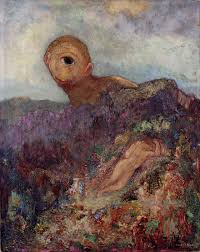
Option D (7 Points) Eric Howerton's "Polyphemus on His Days Off"

Option E (9 Points) Tatyana Tolstaya's Unnecessary Things

Option F (6 Points) Mia Couto's "War of the Clowns"
Option G (8 Points) Kate Crosby's "Inside Where You Belong"

Here's a model comment from Ima Nerd.

Excerpted from Kofituff 6th with Formatting & Content Updates
THE STORY….
The story “Polyphemus On His Days Off” by Eric Howerton, gives a humorous alternative lifestyle to the cyclops from Greek mythology. Howerton rewrites this chapter of Homer's epic poem, The Odyssey in a darkly hilarious act of historiographic metafiction to make Polyphemus a kind of relatable character...except the drinking part, of course...
He shows human characteristics like wearing comfy clothing when alone, or even watching Titanic.

But, my immediate reaction to the story was surprise. I found myself unsettled to a point where I found it easier to take it unserious. However deep down it gave me that feeling that something was in fact wrong, especially when it comes to something so seemingly ordinary like free time. I find it fascinating when something we see everyday and don't give a second thought to makes it into something slightly uncanny or puts the spotlight on it in a weird way.
On days away from his parents’ lofty expectations, Polyphemus hikes lazily in the mountains or makes sand angels in the rolling desert hills. He fondles the branches of an acacia tree and plays hide and go seek with the cacti. For dinner, he orders a mélange of roasted root vegetables and eats them clumsily with a spoon. Snubbing his disco-era waterbed, he lulls himself to sleep on a mat of leaves and straw, dreaming of a rented U-Haul and the quiet drive to a vast interior plain.
I like picturing his excursion because it reminds me of spring days when I was a little kid.
Is it Just me…?
Phemus - can I call him Phemus? is undeniably a “monster” because he plays with cacti and roots for the iceberg to win, but I like to believe that he secretly enjoys the romance aspect movies like Titanic. I envision he and Celine Dion (the nails-down-a-chalkboard sounding Soprano who sings the Titanic theme song) galumphing along in their rented U-Haul on a desert road trip together. 🌵
The story presents Poly-poo, Mr. Phemie himself, as an avatar of postmodernism in all its irony, giving him a fragmented reality, and even the reinterpretation of The Odyssey.
_____________________________________________________________________
Here's the linked story:

_____________________________________________________________________
It makes me feel like there's been something I've overlooked about it in the past, and that gives the feeling of - oddly... paradoxically pleasant - discomfort.
Kind of like listening to Celine Dion singing, well, anything. But here she is singing the cringey mushy Titanic theme song. Polyphemus would definitely play his ukulele as her backup.
I think they'd be buds.
Alright, if you thought the Borowitz piece was wild, we need to talk about the "big boss" of social critiques: Jonathan Haidt’s "Why the Past 10 Years of American Life have been Uniquely Stupid." While Borowitz uses fiction to show us the end of the world, Haidt uses cold, hard facts to show us that we’re already living in the ruins. His essay is basically a autopsy of the American "Digital Town Square," arguing that from 2012 to 2022, social media didn't just connect us—it effectively "shredded" our ability to speak the same language. He summarizes this through the metaphor of the Tower of Babel, explaining how the "Like" and "Share" buttons turned our society into a giant, glitchy gladiator arena where…
Yo guys, we need to talk about the absolute cluster fung that is happening in the tech world. As most of you know, when a billionaire buys a new global corporation, they don’t just play with it—about 95% of the time they usually end up breaking it. We’ve all seen the headlines about X (formerly that blue bird app that we post our sports film on), but Andy Borowitz takes the absurdity to a whole new level in his satirical piece, "Musk Deletes Every Twitter Account but His." Borowitz points out the absolute ridiculousness of modern tech titans acting like emperors of the digital age, framing Elon Musk as a sort of Genghis Khan of the tech era. He describes a fictional…
Introduction
Hello, it’s Fortnite6 again, and my love for Fortnite has not changed, but the piece of literature I am analyzing has. Anyways, I just got done reading the short story “Decortication of Airplane” by Ry Book Suraski, and it is one of those stories that pretty much sticks to you literally. It follows a young girl getting a massage in China and then boarding a plane, contrasted with the point of view of the masseuse, who steals the aircraft’s bolts to sell as scrap metal. This piece has postmodernism written all over it, specifically through the use of magical realism, where the impossible stealing of the airplane’s “skin” is treated as a business, and also through the use of…
Why does it always have to be clowns?
Analyzing Mia Couto’s “War of the Clowns” by Austen Young
One of the craziest statistics to ever exist in the world is that 100% of all wars are started by clowns. Whether it be your politicians or your army general, or tyrannical leaders, one thing lies in common, a big red nose and a little flower pin that shoots water.
I believe that is the point that Mia Couto plans
on achieving through the story of “War of
The Clowns,” clowns start fights and then get
To walk away fine from the aftermaths of them.
Historically, especially by American standards,
wars are started for selfish reasonings by
those put into power. They…
INTRODUCTION: "War of the Clowns" by Mia Couto
In the short story "War of the Clowns" by Mia Couto, the narrative explores a senseless, escalating conflict between two clowns that eventually consumes an entire village. Through a lens of absurdist tragedy, Couto utilizes Magical Realism and Anti-Convention Paradox to critique the nature of civil war and the infectious quality of hatred. The story serves as a haunting parable where the line between performance and reality dissolves, leaving a community in ruins over a disagreement that no one can quite remember the origin of.
EVIDENCE & COMMENTARY
1. Magical Realism (Or: Why is nobody calling Animal Control?) Couto treats the arrival of these tactical, combat-ready clowns with the same casualness most…